A marketing strategy in the age of AI addresses two different questions: how customers find you, and how your team can make its work easier. The first concerns brand visibility, content and distribution. The second concerns processes, data and accountability. Combine them into a single task called “implement AI”, and it becomes difficult to tell what you are spending money on and what has improved.
Start with a specific problem. Do you need customers to find accurate product information? Or does your editorial team spend too much time reworking source material? Each problem needs a different approach, owner and measurement method. Buying a subscription will not solve either on its own.
How customers search: SEO remains the foundation
Alongside traditional results, Google uses AI Overviews and AI Mode. People can also ask questions in standalone AI assistants. These do not, however, form a single shared ranking that you only need to enter once. The answer, cited sources and use of search may vary by product and query.

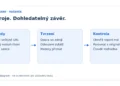
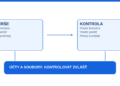

Google Search Central explicitly states that basic SEO practices still apply to its AI features. A page must be indexed and eligible to display a snippet. Google requires no special AI schema or additional technical condition. Meeting these prerequisites is not, however, a promise of a citation.
There is therefore no reason to discard search query analysis, internal links or technical SEO. Instead, broaden the view: which questions do customers face before buying, where do they get answers, and do they find accurate information about you in the process? I cover the practical steps in how to optimize a website for AI.
First, find out where information is actually missing
Review your most important services and products, sales inquiries and customer support questions. For each topic, record what a person needs to decide and whether the website gives them enough information to do so. A product description may lack compatibility details, a service may omit the terms of working together, and a comparison may fail to explain whom each option suits.
That is a more useful brief than “make the texts longer for AI”. The length of an assistant’s answer does not determine the right length for a product page. Add missing specifications, limitations or a use case; do not repeat the same argument in more paragraphs. Give an author and source for expert claims, and a date and update process for time-sensitive information.
Choose external channels according to the audience. Video makes sense when you need to demonstrate something. An expert discussion makes sense where you can genuinely contribute. A platform appearing among AI citations is not, by itself, a reason to start producing posts there without readers. What matters is the connection to the customer’s task, not the number of new profiles.
Inside the company, choose a repeatable process
For internal AI use, first describe how the work is done today: inputs, outputs, frequency, required knowledge and checks. In research, gathering material may be costly, but checking errors may cost even more. In customer support, it matters whether the system drafts an answer for a person or acts autonomously in a customer account.
A suitable first pilot might be preparing an outline from public material or classifying anonymized questions. These are hypothetical examples, not a report of a completed project. In both cases, the expected output can be defined in advance and a person can decide whether to use it. A generated persona, by contrast, is not a substitute for customer research: it can help formulate hypotheses, not confirm what real customers want.
Before connecting a tool, check the terms for the specific account, handling of submitted data, access permissions and the ability to delete or export the output. Consumer accounts and business plans are not automatically interchangeable. The overview of selection criteria for AI tools can help.
How to choose the first pilot from your ideas
Put your proposals in one table. There is no need to assign them deceptively precise scores. You need to see whether you can define the benefit, bound the risk and provide oversight. The following example is a working aid, not a universal investment ranking.
| Task | Owner | Pilot boundaries | What to evaluate |
|---|---|---|---|
| Outline for an expert article | Editor | Approved public sources only; no automatic publication | Time including corrections, and coverage of the brief |
| Classifying support questions | Support lead | Anonymized sample; manual category checks | Misclassification and review time |
| Assistant with CRM access | CRM owner together with IT | Start in a test environment with read access; no record changes | Permissions, incorrect actions and recovery options |
Define when to stop each pilot. Triggers might include using unauthorized data, an output error with serious consequences, or checks so extensive that the expected savings disappear. Stop conditions are not a sign of distrust in innovation. They help distinguish a useful tool from a project kept alive by enthusiasm alone.
Measure value, not the number of generated outputs
Before the pilot, record the existing process using a representative sample. Then compare the same type of work, including preparing the brief, reviewing, correcting and operating costs. A faster first draft does not necessarily mean a cheaper finished output. Alongside time, track factual errors, usability and any work shifted to another colleague.
For visibility, distinguish a brand appearing in an answer, a cited link, a website visit and a business outcome. Google includes traffic from its AI features in the Search Console performance report for the Web search type; do not infer the standalone performance of AI Overviews from overall growth or decline. For your own set of monitored queries, retain the date, product, market and answer as returned. This is a supplementary sample, not a measurement of the entire market.
Someone must own the strategy
The output should not be a long list of applications. It should be a few priorities with an owner, inputs, a budget framework and an evaluation date. For content changes, specify who supplies expert material and who approves it. For automation, specify who can stop it and who handles errors. Without these roles, accountability can easily dissolve between marketing, IT and the supplier.
Need to bring these two areas together in a workable brief? The AI strategy and project management page outlines how we can work together. If your main concern is discoverability and accurate brand information, continue with GEO optimization. Choose the problem first, then the tool.