

Reciprocal Rank Fusion (RRF) is a method that combines several ranked result lists into one ranking. Rather than the original scores, it uses each document’s position in the individual lists. It can be used, for example, to combine lexical and vector search. However, it does not read content, assess its age or tell us how Google or ChatGPT ranks results today.
For SEO and GEO, this distinction is useful. “The system combines multiple searches”, “it uses RRF” and “it favours new articles” are three different claims. None automatically follows from another. The explanation below connects the original 2009 paper, documentation for a specific implementation, and separate research into temporal bias in language models.
RRF combines rankings, not incomparable scores
Imagine an internal search system for product documentation. One method looks for exact terms, making it good at finding a feature name or error code. The other looks for semantically similar passages, so it may find an answer even when the question is worded differently. Both return candidates, but their scores may not use the same scale. Simply adding them would assume comparability that has not been established.



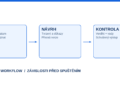
RRF sidesteps this problem: it takes the ranking from each list and adds a contribution to each retrieved item according to its position. The higher a document ranks in a list, the larger its contribution. A document found by multiple methods can receive several contributions. The original 2009 RRF paper, by Gordon V. Cormack, Charles L. A. Clarke and Stefan Büttcher, describes precisely this fusion of rankings without depending on arbitrary scores from the input systems.
This simplification comes at the cost of information. For basic RRF, the difference between first and second place is determined by their positions, not by whether their original scores are almost identical or very different. RRF does not convert every score into the probability of a correct answer. It is a rule for constructing a combined ranking.
How RRF is calculated: two lists and four documents
The basic formula can be written as RRF(d) = sum of 1 / (k + rank(d)). You add contributions across the input lists. Ranks start at one; k is a constant that dampens the differences between high and low positions. The original authors used k = 60 in their validation experiments. The current Elasticsearch documentation gives the same default value, with the parameter named rank_constant.
The following example is deliberately illustrative. It does not show Google results, real documents or a measurement of search quality. The first method returns A, B, C; the second B, C, D. For k = 60, the stated formula gives the following recalculated values:
| Document | Rank in the first list | Rank in the second list | RRF score |
|---|---|---|---|
| B | 2 | 1 | 0.032522 |
| C | 3 | 2 | 0.032002 |
| A | 1 | not found | 0.016393 |
| D | not found | 3 | 0.015873 |
Document B receives 1/62 + 1/61, while A receives only 1/61. B therefore wins overall, even though it did not rank first in the first list. With finite lists, an item absent from a particular list receives no contribution from it. The Elastic implementation cited above handles missing results in the same way; we do not assign an arbitrary substitute rank.
The table illustrates the calculation, not proof that B is the best factual answer. If both inputs favour an incorrect document, fusion will not detect the error. And if the correct document appears in none of the input lists, RRF will not find it on its own.
The constant and list depth change the result
A higher k reduces the relative differences between contributions from individual ranks. A lower k, by contrast, gives the top of the list a stronger advantage. It is not the number of results or an article-age threshold. The value 60 is a familiar choice from the original research and a particular product’s default, not a universal optimum for every search.
A separate decision is how deep the lists entering the fusion should be. Elasticsearch uses rank_window_size for this. Shortening a list means some documents lose a contribution they would have received from a longer list. Even the top of the ranking may therefore change. The number of items returned to the user is not the same as the number of candidates used in fusion.
For your own system, document identity also needs to be consistent. Two URLs for the same content, or different chunks of one document, may not be the same item to the application. Define the merge behaviour before testing. Otherwise, you may compare differently prepared inputs and mistakenly attribute their differences to the formula itself.
Fusion, reranking and freshness solve different problems
RRF can form part of a search pipeline that first retrieves several candidate sets and then combines them. A further content-based reranking step may follow, for example using a language model. This step is called reranking. It is not a mandatory part of RRF, and the basic formula does not require a language model.
Likewise, fusion is not the same as query fan-out. Fan-out creates additional searches; fusion handles combining their results. The existence of multiple subqueries does not establish that a particular service combines them using RRF.
Freshness may influence the initial search or a later ranking stage. The basic RRF formula, however, contains no date. If the lists and k remain unchanged and only a document’s metadata date changes, this calculation stays the same. That does not rule out a date effect elsewhere in the overall system; it simply avoids attributing it to the wrong layer.
What the recency bias study actually shows
The source analysis by Metehan Yesilyurt connects an allegedly observed ChatGPT configuration with research into a preference for newer texts. It does not confirm OpenAI’s current production settings or deployment of RRF. A string resembling a configuration parameter and an experiment with selected models are different kinds of evidence.
The 2025 study by Fang and colleagues tested passage reranking on the TREC DL21 and DL22 collections. In the listwise experiment, researchers used seven models and inserted artificial publication dates into passages. They assigned newer dates to passages that originally ranked lower. The supplementary pairwise experiment had a narrower scope: four open models and the DL21 collection, with pairs sharing the same human-assessed relevance level.
In this setup, dates influenced the resulting preferences. That is a reason to test your own reranker’s sensitivity to an irrelevant timestamp. It is not evidence that any new blog article will beat an older expert source, that all current AI services share the same weakness, or that simply changing a date will increase your citations. The study did not audit the complete production search systems of ChatGPT or Google.
Ask suppliers for inputs and a verifiable output
If someone recommends RRF for your own search, ask to see both input lists, document identifiers, candidate depth, the constant and the resulting ranking. It must be possible to recalculate the scores for a few items. Only then does it make sense to compare whether the change better addresses real user questions.
Keep questions and the source corpus identical for the test, prepare human relevance assessments, and separate the quality of retrieved material from the quality of the subsequent answer. Also track latency and cases where the correct document never reached the candidate set. A better result from one illustrative sum is not a benefit of the entire deployment.
For a public website, it is more useful to move from a specific problem towards optimising the website for AI search than to rewrite content around a supposed internal formula. RRF helps you understand one technical option. It does not become a recipe for guaranteed visibility.
Deciding on internal search or RAG?
I can help clarify what problem your new search should solve, what source material it needs and how to compare options. Let’s discuss the brief for your search solution. We will relate the method choice and technical verification to your specific project, not to a promise of better rankings for a public website.