
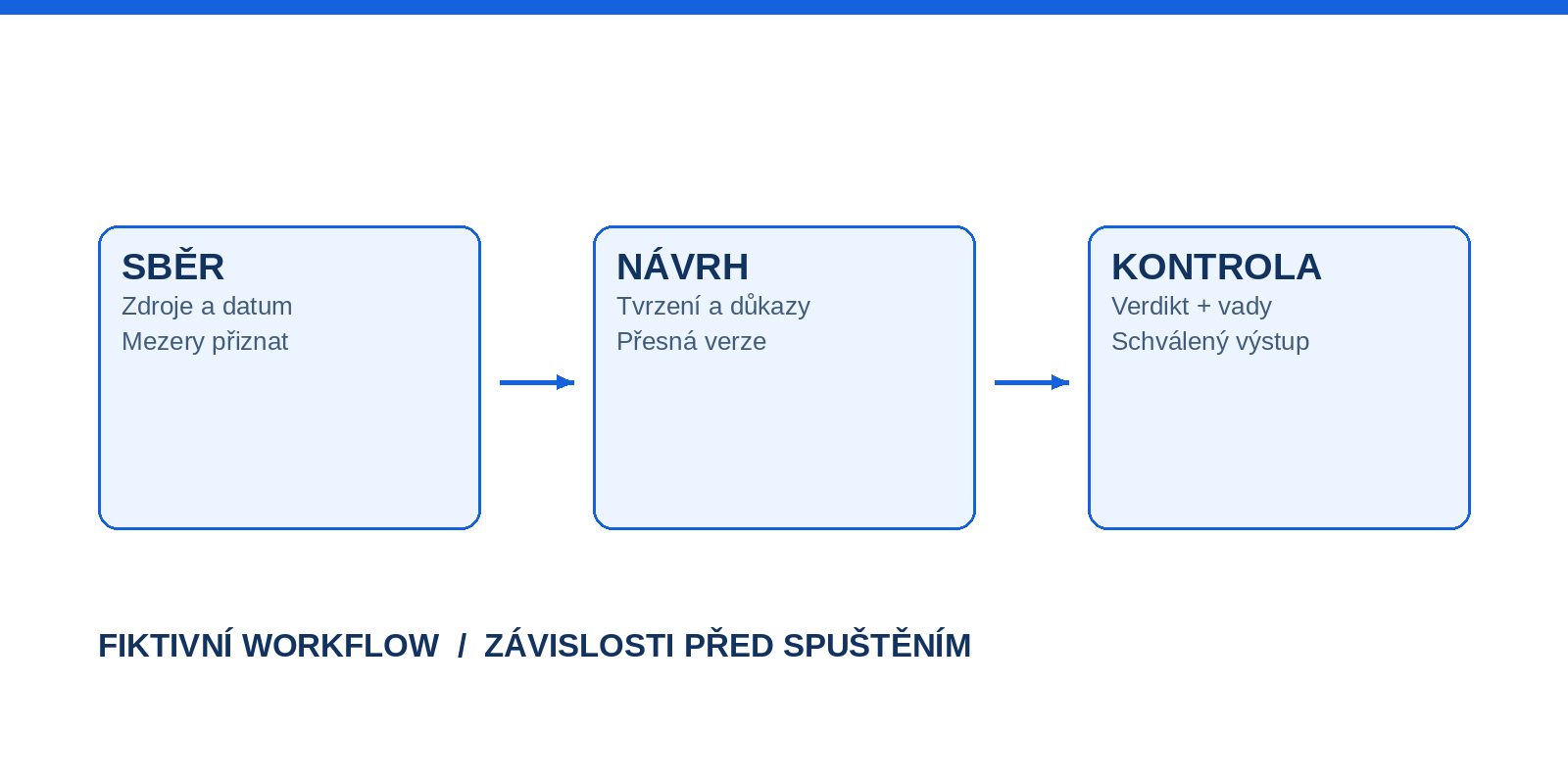

Hermes Kanban is useful for work that has several stages, needs a clear handoff and must remain traceable after a single conversation ends. A card defines the responsible role and expected output, a dependency on an earlier card prevents work from starting too soon, and a separate review distinguishes a finished draft from an approved result. The board itself, however, cannot judge whether a delivered file actually meets the brief.
A research-led guide based on official documentation checked on 19 November 2026. The three-step example is a fictional design, not an extract from a private board. No demonstration graph was created, no worker was started and no model query was made for this article.
Cards, responsible roles and working directories
The official Kanban overview distinguishes a task from its individual runs. A task is a persistent card with a brief, a status and one assignee: the profile assigned to it. A run is one attempt to process that task. After a crash and restart, you therefore have another attempt with its own result and error, not a “new task”.
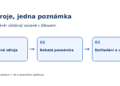

The dispatcher is the process that selects eligible cards and starts their workers. By default, it is part of the gateway. An open board in Desktop therefore does not prove that the dispatcher is running or has capacity. The assigned profile must exist on that system and be enabled for dispatch; otherwise, a card may remain ready without an actual worker.
A workspace is the directory in which the worker operates. The default scratch workspace is temporary and is cleaned up after completion. A suitably chosen persistent directory or Git worktree can preserve the full working context; according to the documentation, files explicitly declared as artifacts are copied to persistent attachments before cleanup. Simply putting a file path in the final message is not enough to ensure that the file will still exist a week later.
Kanban is not the same as a group chat between bots or delegating a subtask. Chat works well for coordination and quick second opinions. Kanban adds records, responsibility and dependencies that do not rely on the model remembering them in its currently open context. The current release also documents resumable subagents, so do not base the distinction on the outdated claim that all delegation must disappear after a restart. Here, the focus is the card lifecycle and process control.
A fictional example: collection → analysis → review
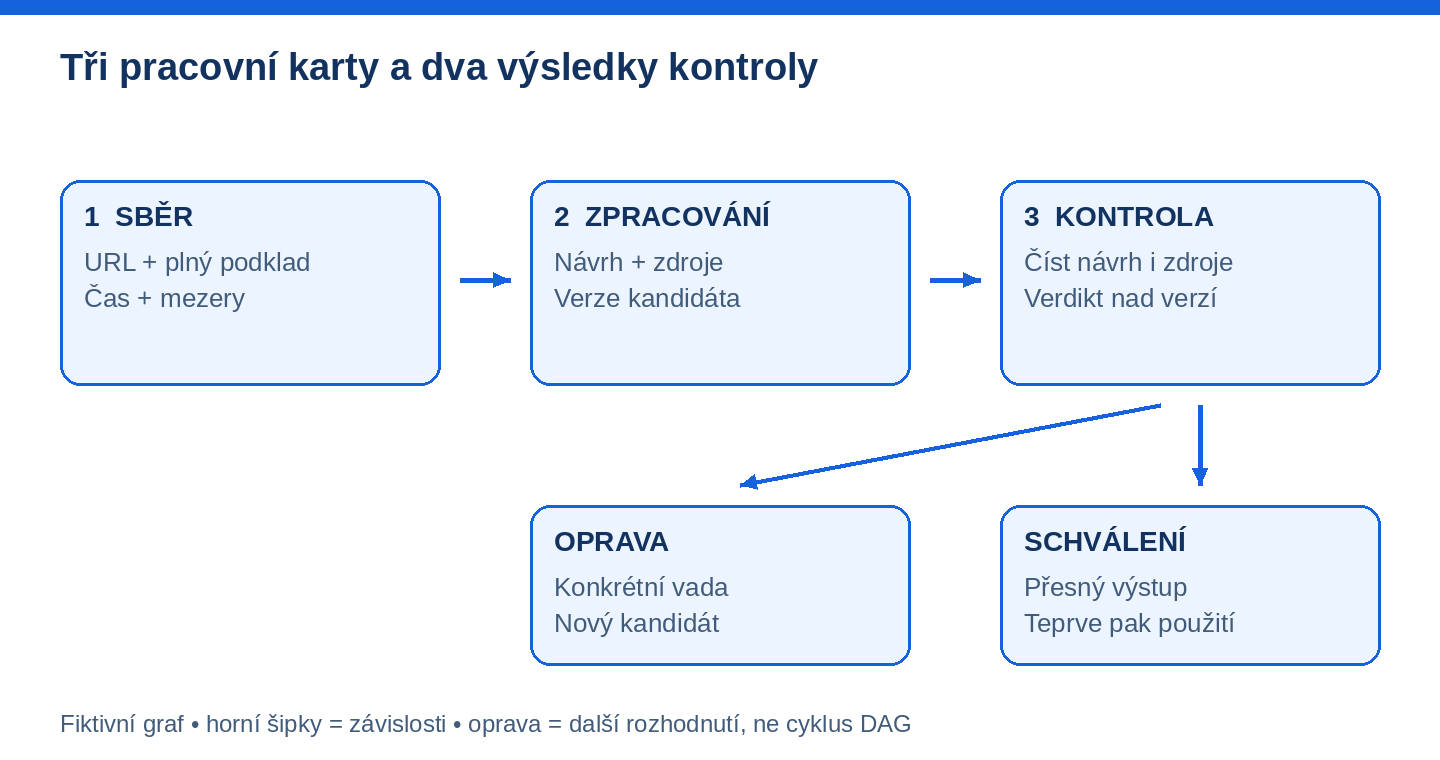
A small company wants an internal summary of changes to the public guides for three tools. No automatic publication and no client data. Instead of asking someone to “make a report”, you split the work into three cards. The role names below are illustrative; before assigning them for real, you would need to check them against existing profiles.
- Collect source material — researcher role. The inputs are exact public URLs and the date of the previous summary. The output is the full available text, source identity, retrieval time and a list of gaps. Acceptance: inaccessible sources are explicitly identified, not presented as unchanged.
- Prepare the summary — analyst role. The collection card is its parent. The output is a draft summary with links to specific passages. Acceptance: every claim about a change has supporting evidence, recommendations are separated from source descriptions, and missing data is never filled in with estimates.
- Review — reviewer role. The analysis card is its parent. The reviewer reads both the draft and the actual source material. The output is a verdict on the exact candidate version, a list of defects and, where appropriate, an approved version. Without approval, the result goes no further.
The first two cards do not complete the entire business task. They complete their own stage: collection or drafting. If the reviewer finds a mixed-up date, they return the specific claim, the correct source and the condition for fixing it. You want an actionable defect with the original evidence preserved, not a vague “try again”.
Create dependencies before releasing the work
A parent → child dependency means the next card waits for the previous one to finish. With several parents, it waits for all of them. The result is a directed acyclic graph, often called a DAG. Direction matters: if analysis needs collection, collection is the parent. Reversing the dependency can block the very work you are waiting for.
Define dependencies when creating the downstream cards. Adding “wait for the research” to the description later is no substitute for a dependency. The documentation also rejects adding an ordinary new dependency to a child that is already running: an arrow cannot retroactively serialize work that has started. There is a narrow exception for the run owner when handing off to wait for a dependency, not a general trick for repairing a graph already in motion.
For a larger decomposition, keep the first piece of work waiting on a real, open coordination card until all dependencies and briefs have been checked. The coordinator then completes that card to release the graph. But do not make a parent wait for its own descendants to finish while it is also preventing them from starting. That is a process deadlock, not caution.
Before releasing the work, read back every card you created: the exact profile, parents, directory, acceptance criteria and permitted operations. An idempotency key helps automated creation retries return an existing card rather than create a duplicate. It does not, however, protect against sending the same email twice within the task itself.
Choose one review model, not two at once
The official tutorial describes two distinct options. In our three-step example, review is a separate downstream card. The author completes the analysis card with a structured handoff, which releases the reviewer. If they instead left the parent blocked with “waiting for review”, the reviewer, as its child, could not start.
The other option is review on the same card. The implementer uses the kanban_request_review tool, the card moves to review, and the reviewer either completes it or uses kanban_request_changes to return specific corrections to the original implementer. This is a supported lifecycle, not a blocker. Do not add both a separate reviewer and this transition for the same change unless you want two uncoordinated review branches.
A separate review card must explicitly define what completing it means. “Review performed” can include a rejection. If the next card sends the report, it must read the actual verdict and approved version, not just the previous card’s green status. Formally completing an assessment and approving a candidate for use are two different pieces of information.
Done, review, waiting and retrying are not synonyms
Todo can mean waiting for predecessors; ready means ready to be claimed; running means an active attempt. Review is the review stage, and blocked means a real obstacle. A card can also be in triage for clarification. Moving it to done should indicate that the acceptance criteria for its stage have been met, not that the worker is tired or has used up its attempts.
A worker uses kanban_* tools to manage the card. A person can use the CLI or the board. On startup, the worker reads its brief, parent handoffs, comments and previous attempts; during long work, it sends a heartbeat. At the end, it needs an actual status transition with a handoff, not just a message saying “done” in the conversation.
Name a blocker by its cause. A missing owner decision, missing access and a temporary network error need different solutions. Waiting for an open parent can be routed back to todo and resume automatically when the parent completes. Do not treat ordinary reviewer feedback as missing permission: return specific changes through the supported review path.
After a crash, read the run history first. Repeating the same procedure after an invalid login will not help. The current overview describes bounded retries, protection against repeated starts and special handling for terminal provider errors. Do not rely on the older shorthand that “everything gets two tries”. An empty error queue is not an acceptance test, and manually unblocking a card does not fix the cause.
Persistent state does not mean resuming at the exact last instruction
Cards, runs and handoffs live in SQLite. That gives the process a traceable history, but does not make every external effect transactional. If a worker sends a report and crashes before recording confirmation, the new run must check the destination first. Otherwise, it may send the report again. Operation identifiers, stored confirmations and reading back the actual result are application-level responsibilities.
Recovery depends on how the system is operated. The documentation distinguishes detecting a dead worker, an expired claim and a run that has gone too long without a heartbeat. Under systemd, it describes separate scopes for workers so that restarting the gateway does not automatically terminate them; access to the user bus is a prerequisite for that launch method. Neither “a restart kills everything” nor “a restart saves everything” is universally correct.
According to the current overview, Kanban is designed as a single-host system. A persistent local database is not automatically a distributed coordinator across servers. Whether you use Linux, WSL2 or another supported platform, check how the gateway and workers actually run. The example here is not a verified failover test of any of those environments.
A handoff should answer: what was produced, where it is, which exact version was checked, what passed and what remains open. Actually open the files. For source research, verify the passage; for an export, its readability; for publication, the actual public destination. A worker’s message is a claim about the result, not the result itself. The content brief and template can also help you write a good assignment for a content stage.
What to check before the first real run
This explanation is based on the live guides as of the verification date and a comparison with stable release v0.23.2 of 16 November 2026. Release notes are not a complete specification of every option available today. Check your own version, available tools, actual profiles, dependencies, persistent outputs and limited permission scope. The first production process should end with an internal draft, not an irreversible write to a company system.
Set up a handoff you can verify
Do you have a recurring AI process where it is unclear who takes over the source material and who approves the result? Get in touch with your specific workflow. I can help you define stages, responsibilities and evidence for accepting the work before you start adding more automation.




