

UCP and ACP are open protocols that standardise communication between AI environments and a merchant’s systems. For an online store, they can provide a route from a recommended product to a cart or order. Implementation alone, however, does not ensure that an assistant will recommend you or that a particular platform will accept you as a participating seller.[6][11]
Before commissioning development, separate three questions: what the specification supports, which of those capabilities the chosen platform uses, and whether that route is available to your store. Confusing them leads to buying an integration that matches the documentation but has nowhere to serve a customer. The comparison below draws on materials checked on 16 November 2026; the availability of individual shopping environments must be confirmed before deployment.
A protocol connects systems; it does not choose recommendation winners
Imagine a customer looking for hiking boots in a particular size who wants them before the weekend. AI may first help them choose. But an actual purchase requires the right variant, current availability, delivery cost and payment terms. A product description or chatbot answer must not replace confirmation of those details by the store.
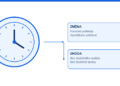
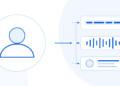

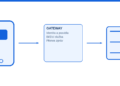
A protocol defines how systems exchange this information and which operations they can perform. It does not automatically address recommendation quality. Google’s UCP FAQ explicitly says that choosing a native integration does not affect the order of offers in product listings. It adds a direct purchase option, not a ranking bonus.[25]
It is equally important not to treat a product feed, structured data and a transactional API as the same thing. A feed supplies a catalogue. On-page markup describes the page’s content. A transactional interface works with the state of a specific cart or purchase. Good product information helps at all these layers, but adding Product schema does not itself create a working payment process. Google also does not generally require a special AI file or special schema.org markup for participation in AI Overviews and AI Mode.[14]
UCP: a store publishes its capabilities and agrees a shared scope
Universal Commerce Protocol was developed with Google, Shopify and other partners as a common language for the shopping journey. Its current documentation covers catalogues, carts, checkout, identity linking and order management. Individual capabilities are combined according to what the store and platform actually support.[6][13]
The store publishes a profile at /.well-known/ucp. This is not a marketing page, but machine-readable information about supported services, versions and payment options. The specification provides for negotiating capabilities shared by both sides. What matters for integration is therefore agreement on a specific interface, not merely that both use the acronym UCP.[7][31]
The public specification supports various communication methods, including REST and MCP. That does not mean each is equally available in Google. When checked, Google’s FAQ recommended REST as the default route for Native Checkout; it described MCP as Early Access Beta requiring onboarding and integration testing before production approval.[25]
For the specification discussed in this article, I use the dated UCP 2026-08-25 branch. Dated versions matter for maintenance too: a supplier should state which version it builds against and what happens when support changes. A documentation date is not evidence that a specific merchant account already uses the same feature set.[7][24]
ACP can no longer be described merely as checkout in ChatGPT
Agentic Commerce Protocol is maintained by OpenAI and Stripe. In September 2025, they introduced it alongside Instant Checkout: in a supported scenario, shoppers could confirm a purchase in ChatGPT while the merchant continued to handle the order, payment and delivery. That is the documented starting point of the product, not a sufficient description of its use today.[12]
On 24 March 2026, OpenAI announced an expansion of ACP for product discovery, meaning finding and comparing products. It also said that the original Instant Checkout had not provided the desired flexibility and that it was enabling merchants to use their own checkout while focusing on discovery. Examples of catalogue integrations included Target, Sephora, Best Buy and Wayfair. This is an operator announcement, not our test of those stores.[10]
The specification itself has also expanded. When checked, the repository listed 2026-04-17 as the latest stable dated set and still labelled the overall protocol beta. Alongside checkout, that set covers carts, feeds, orders, authentication and MCP. A comparison saying “ACP only handles payment; UCP handles everything else” would therefore be misleading.[22][23]
Nor does ACP’s openness mean automatic product inclusion in ChatGPT. The official protocol site explicitly distinguishes implementing the standard from the participation rules of individual AI platforms.[11] Current OpenAI documentation offers separate routes for product feeds, website access and deeper integrations; choose the specific option based on today’s offering, not a historical launch article.[9][32]
What is a real deployment and what is still only a possibility
For UCP, for example, Google publicly announced on 11 February 2026 that UCP-based checkout was rolling out to US shoppers at Etsy and Wayfair in AI Mode and Gemini. This demonstrates a specific announced use, not universal availability for all stores or countries.[21] For ACP, alongside the original Etsy purchase flow, there are later announced product discovery integrations. Each use addresses a different part of the shopping journey.[10][12]
In practice, therefore, track the standard’s status, the supplier implementation’s status and your own eligibility separately. A list of protocol supporters is not a list of production stores. A sample API is not a working integration with your ERP. And an announcement of expansion into a new market does not confirm approval of your particular assortment, currency, payment method and shipping arrangements.
The same applies to Universal Cart. The source article from Engadget describes it as a Google product bringing together shopping selections and other features, while mentioning UCP separately alongside it.[3] Do not confuse the product interface with the underlying protocol. If offered “Universal Cart implementation”, ask to see the specific customer journey available today and its conditions.
An order must remain correct even when something fails
In both approaches, the merchant remains the merchant of record, the party responsible for the sale in the described flow. The AI interface does not assume this responsibility.[7][11] Define the source of truth for price, stock and orders in the integration brief. A successful demonstration is not enough; what happens when a price changes or the last item sells out matters too.
Google explicitly requires the merchant to check current stock and return an error if an item is unavailable. Similarly, the store must check whether it can deliver to the supplied address; it is not enough to rely on Google to restrict it correctly beforehand.[25] These are tasks for business logic and the backend, not a prompt.
Credentials and card numbers should not travel in ordinary conversation text. UCP defines payment handlers, while ACP has a separate mechanism for delegated transmission of payment details.[7][12] Before integration, the developer and payment provider must verify the specific supported flow. Saying “we already have a payment gateway” does not, on its own, confirm compatibility.
Include a repeated request after a timeout, a declined payment, an address change, an unavailable variant and order retrieval in acceptance testing. ACP release 2026-04-17 explicitly tightens request idempotency, protection against a repeated operation creating another purchase.[23] In the UCP specification, checkout completion is also normally tied to user confirmation through a trusted interface unless the AP2 Mandates extension is supported. “Agentic” therefore does not mean permission to buy without a human by default.[7]
How to decide whether to pursue integration
Start with the target channel and a specific scenario. A Czech online store seeking more accurate product presentation may need catalogue work, not an agentic checkout of its own immediately. A store with a supported overseas market and a ready platform, by contrast, may investigate transactional integration. Without confirmed availability, extensive development is premature.
- Check participation for your market, assortment and account with the target platform and ecommerce supplier. Ask them to distinguish an available product from a beta and a plan.
- Choose one bounded shopping scenario. Describe the product variant, stock, payment, delivery, confirmation and any handoff to your own website.
- List supported versions and capabilities. Divide work between the catalogue, backend, payment provider and customer support.
- Define acceptance tests and a way to disable the new route in advance. Success means a correct, traceable order, not just an HTTP 200 response.
- Assess business value from verified orders, margin, error rates and operating costs. Do not credit the integration with all growth from a concurrent campaign.
If prices currently differ between the feed and website or ownership of product data is unclear, address that foundation first. Buying another protocol will not resolve a data dispute. At the same time, not every improvement must wait for pilot access: accurate specifications, variants, availability and terms benefit ordinary customers too.
Establish the path to purchase before the budget
Treat UCP and ACP as connectivity options evolving alongside platforms. The best choice is not the one with the longest acronym list, but the one that serves an available channel and fits your operations. Ask a supplier to describe the specific flow, version, participation conditions and verification of error states.
If you are still addressing product discoverability and content obstacles, see the process for optimising a website for AI search.
Sources
[3] Engadget: Google Universal Cart
[7] UCP 2026-08-25: Checkout capability
[9] OpenAI: Commerce in ChatGPT
[10] OpenAI: Powering Product Discovery in ChatGPT
[11] ACP: official protocol site
[12] OpenAI: Buy it in ChatGPT
[13] Google: UCP launch 2026-01-11
[14] Google Search Central: AI features and your website
[21] Google: Digital commerce 2026, February update
[22] ACP repository README and version index
[23] ACP release 2026-04-17 changelog
[24] UCP versioning
[25] Google UCP FAQ
[31] UCP specification overview and negotiation
[32] OpenAI: Submit product feeds
Considering an AI shopping integration?
Connecting product materials, technical priorities and measurement can be scoped within a GEO and SEO engagement. Specific development work and programme admission are not automatically included. Tell me which shopping journey you are considering.