


An autoregressive language model processes text as a sequence of numerically represented tokens and estimates the next part of its response as it generates it. Finding a page, extracting its text and selecting sources, however, are usually handled by other parts of the application. Saying “AI reads the web” therefore conflates several distinct steps. For an editor, it matters at which step an error can arise.
You do not need to write like a programmer or turn every page into a dictionary. You need to make essential information accessible, identify what it refers to and keep conditions alongside the claims they qualify. None of these changes alone guarantees that anyone will select your website as a source.
The model itself is neither a search engine nor a browser
Under the AI label, a user may encounter a basic chat interface, a tool with web search or an agent that works with several applications in sequence. The fact that they all answer in natural language does not mean they obtain supporting material in the same way.
Further reading
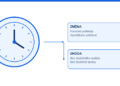

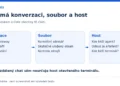
For a simple mental model, separate three activities. The search component finds possible sources. Page processing extracts usable content from them. The model then works with what it actually received as input and generates an answer. A particular product may repeat individual steps, skip some or add other tools.
For AI Overviews and AI Mode, for example, Google describes the possibility of several related searches, not a fixed number of queries or a uniform path for every answer. A separate article covers this part: query fan-out. Here, let us focus on what happens to text and which editorial mistakes make it harder to use correctly.
First, the application must obtain the actual text
What a person sees on a monitor may not be what a particular tool extracts from a page. One application loads HTML and removes navigation. Another uses a browser; another works with an existing index or only a returned snippet. It depends on the access method, not one universal ability shared by “AI bots”.
Do not hide an essential answer solely in an image whose text appears nowhere else. A price list being legible in a screenshot is not enough. Both the reader and the processing tool need to identify the service, price, unit and condition. In a table, preserve the relationship between headers and values.
Google’s documentation for AI features recommends making important content available as text. It also highlights crawl access and internal links. This does not mean every PDF, expandable element or use of JavaScript automatically prevents content from being used. Check the specific page and loading path, not the technology label.
A token is not a word, and tokenisation is not yet understanding
A token is a unit into which a tokenizer splits its input. It may correspond to a word, part of a word, punctuation or another part of the written text. The tokenizer then assigns vocabulary identifiers to these units. The Hugging Face documentation demonstrates different tokenisation methods, including subword splitting.
It therefore makes no sense to take an approximate English words-to-tokens conversion as an exact rule for a Czech article. The result depends on both the tokenizer and the specific text. Without choosing a model and actually calculating it, you cannot state the exact token count of your sentence.
Splitting text into tokens does not, by itself, verify whether a claim is true or belongs to the correct product. It prepares numerical input. Only subsequent model layers work with the input representations in context. If you provide the wrong date, tokenisation will not turn it into the right one.
Context and attention connect parts of a message
The model further transforms tokens into vector representations: sets of numbers used in computation. In transformer models, the attention mechanism helps incorporate relationships between available input positions. When processing one part of the text, another part important to its meaning or grammar can therefore contribute. Which positions are accessible depends on the architecture and masking used.
Hugging Face’s explanation of transformers illustrates this principle through translation: the correct form of a word may depend on a related word elsewhere in the sentence. For a Czech editor, the practical implication is simple. “It is also available in this variant” is not specific enough if the surrounding text does not make clear which product and variant you mean.
But do not imagine attention as a highlighter with which the model underlines a heading and thereby decides a page’s trustworthiness. It is part of computation inside the model, not a public SEO score. Knowing about this mechanism does not tell you how many times to repeat a brand or how to activate a particular neuron by editing one sentence.
Similarly, distinguish a vector representation inside a model from a document embedding intended for retrieval. Both involve numbers, but they are not interchangeable operations. A similarity score between two documents is not a complete description of how a model generates its next sentence.
Next-token prediction: how an answer is generated
An autoregressive language model generates text by successively predicting the next token. From the available context, it calculates a probability distribution over possible continuations. Selection then depends on the generation settings; it need not always choose the highest-probability token. The selected token is added to the text so far, and the process continues.
The official Hugging Face guide to causal language modelling describes next-token prediction and the restriction to preceding positions. This explanation concerns that type of language modelling. It does not claim that every AI architecture handles every task in the same way.
A community article by Alonso Silva Allende also provides an illustration using the older GPT-2. By continuing a numerical sequence, it shows how the next token is fed back into the input. The values in that demonstration are not probabilities for current commercial models or evidence of their answer accuracy.
Why should such a basic mechanism matter to a marketer? Because the probability of a continuation is not the probability of truth. A study title, date and link may look like ordinary parts of an expert answer and still be wrong. A fluent sentence is not verification of its content.
Equally, the explanation about predicting tokens does not mean the process is merely filling in a few nearby words without wider relationships. The model works with learned representations and context. But assessing a particular result still requires a source, calculation or other appropriate check—not an impression of persuasiveness.
Training, working context and source retrieval are different things
Training changes the model’s parameters. During ordinary query processing, an application can supply instructions, part of the conversation and retrieved material to the model’s working context. That material influences the answer without its mere inclusion constituting new model training.
When an assistant loads your page and summarises it correctly, that demonstrates use in that particular task. It does not prove that the information has been permanently learned, that other users will receive it or that it entered a new version of the model. Data use for possible later training is a separate question governed by the provider’s terms.
The working context also has limited capacity. The application must decide what to include and what to leave out. Retrieval systems may therefore split documents into smaller passages called chunks. A chunk is not a token. It is a section of content chosen during document processing; it can contain many tokens, and its boundaries need not match your paragraph.
Microsoft’s RAG guidance for Azure AI Search describes preparing and selecting relevant document sections with the model’s limited input in mind. That is a specific description of a retrieval layer. It does not mean every public AI product splits every website with the same algorithm.
An illustrative edit: keep the offer and its conditions together
A fictional company is explaining the scope of support for its software. The following example is not a real offer or an experience from a client project. The original wording reads:
It is included in the higher-tier package. The service is normally available on working days. For the basic solution, it is ordered separately.
Within the full layout, a visitor may understand the subject from a neighbouring card. Once the paragraph is extracted, however, it is unclear what “it” means, which service is ordered separately and which product the package belongs to. An editorial revision might read:
Technical support for Alfa software is included in the Pro package. With the Basic package, technical support is ordered separately. Support is normally available on working days.
The revision added an explicit subject and names for the illustrative packages. It did not invent operating hours, response times or public-holiday availability. Those details would need checking with the owner of the offer. A precise sentence is not permission to supply a missing commercial condition.
Handle figures, comparisons and instructions similarly. Keep a value together with its unit and period. Keep a recommendation with the condition under which it applies. Label both alternatives in a comparison. For instructions, explain which system and situation the procedure works in. The passage can then be used correctly without reading the entire page.
Do not derive a universal SEO formula from model mechanics
It makes sense to remove ambiguous references, give sections descriptive headings and avoid separating an exception from its rule. It does not make sense to delete necessary caveats, force the brand into every paragraph or cut an argument into mandatory blocks of equal length.
Microsoft’s advice on content for AI search emphasises clear structure and understandable, self-contained sections. Such advice can serve as an editorial guide. It is not a complete algorithm specification, let alone a rule for every other platform.
Google explicitly states that its AI features do not require a special AI file or special schema.org markup. The distinction between making content easier to read correctly and guaranteeing its selection as a result therefore still holds. A stylistic edit cannot promise the latter.
Start with one important extract. Remove it from the layout and ask a colleague to identify what it refers to, whom it applies to and where its boundaries lie. Then compare the result with the actual offer. If you use AI to create text, continue with the workflow from source material to checked AI content. Use model mechanics to improve the brief and verification, not to replace professional judgement.
Want your text to make sense outside its original page too?
I can review important website passages and their editing brief with you: what must be stated explicitly, which conditions to preserve and how to check the text. Tell me which texts or AI workflows you are working on. Together we will choose an appropriate scope for the consultation.




