Adversarial machine learning studies how deliberate manipulation can make a machine learning system behave in unintended ways, and how to defend against it. It is not just about text a user writes to try to bypass a chatbot’s rules. Manipulation can target training data, input, retrieved documents and tools connected to an application.
For a company, the key questions are what the AI is allowed to do and what information it can access. An incorrect answer in a test chat and an incorrect instruction to an assistant that can modify customer data have different consequences. Likewise, not every false answer is evidence of an attack.
First distinguish the error, the manipulation and the point of intervention
A language model can produce false information without an attacker. That error needs addressing, but it does not, on its own, prove data poisoning or a system breach. When assessing an incident, ask what changed, who could have made the change and how the dangerous content reached the decision.
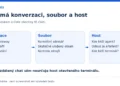
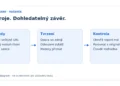


The NIST taxonomy from March 2025 distinguishes attacks by, among other things, lifecycle stage, objective and attacker capabilities. The following simplification provides a practical starting point:
- Data poisoning: manipulating data used in training or fine-tuning; applications also need to track the origin of the data they use as source material.
- Evasion: modified input is intended to trigger an incorrect system response during use, without changing its training.
- Prompt injection: instructions in the input or external source material influence a language model’s behavior in an unintended way.
- Model extraction: attempts to obtain information about a model or imitate its behavior; this is not a synonym for obtaining training documents.
- Sensitive information disclosure: making data available that should not have been released. You need to establish whether it comes from the context, a connected repository or another part of the system.
A single incident can combine several problems. For defense, however, describing the specific path and affected permission is more useful than calling everything “hacking AI.”
Why even a document the AI is only supposed to read can be dangerous
OWASP distinguishes direct and indirect prompt injection. In direct injection, the problematic instruction comes from the user. In indirect injection, it comes, for example, from a webpage or file that the application loads as source material. The risk arises when the system starts following that content as an instruction instead of merely processing it as data.
A hypothetical situation: an assistant is asked to summarize supplier documents while also having access to an internal system. The supplier’s text must not decide who the application shares internal documents with or whether it sends a message. The application and its permissions must enforce these boundaries, not trust in the source author’s good intentions.
Connecting your own document retrieval, known as RAG, does not remove the problem by itself. Retrieved passages are still input whose origin and access rights need checking. Handling the output is just as important: model-generated text should not become a command for another system without validation.
What product recommendation experiments actually showed
In their study Manipulating Large Language Models to Increase Product Visibility, September 2024 version, Aounon Kumar and Himabindu Lakkaraju examined changes in recommendations after inserting an optimized text sequence into product information. They used a catalog of fictional coffee makers and tracked two target items. In their experimental setup, they succeeded in increasing the probability that the model would recommend the target product first.
That is not the same as a universal method for taking control of today’s search. The study contains real experiments, not just theoretical discussion, but its conclusions belong to that particular test. Results also varied with product ordering and how the sequence was prepared. Some variants did not provide a consistent advantage. The takeaway for an application operator is that supplier descriptions may contain manipulative input and must not be treated as trusted instructions.
A different type of evidence comes from Reboot’s experiment promoting its director, Shai Aharony, in answers to a question about the sexiest bald man of 2025. The agency reports success in some ChatGPT and Perplexity answers. It did not observe the desired mention in Gemini or Claude, and manual monitoring results differed from those of the monitoring tool.
This is the agency’s own report on a narrowly defined topic, not independent confirmation of general effectiveness. The influence described through web sources also does not prove that the model was retrained. Reboot associates some of the differences with the use of live search; its explanation of the inner workings of other models is an interpretation in that report, not a proven mechanism.
Model collapse is not automatically a deliberate attack
So-called model collapse concerns the deterioration of models under certain forms of repeated training on generated data. A study published in Nature in July 2024 examines this phenomenon and highlights the consequences of indiscriminate use of such content. It does not, however, prove that every synthetic data point is harmful or that every application using AI must gradually fail.
A training data quality problem can arise without any attacker intent. It therefore makes little sense to place it alongside advertising manipulation or targeted data poisoning without further qualification. In practice, it points to the need to know where data comes from and verify its quality, not to a way of identifying an attack from one strange answer.
How to establish defenses in an ordinary company
Start with an overview of what the application reads, what it can change and where it may send information. Assign a responsible person and identify the impact of an error for each operation. An assistant for drafting text generally does not need access to the entire customer database or permission to publish directly.
OWASP lists restricting permissions, separating untrusted content, validating outputs and requiring human approval for risky operations among its measures. This is not a single protective prompt that solves everything. Enforce permissions in the code and system, log actions and prepare a way to stop the integration. For high-impact changes, you also need a recovery method, not just an error log.
Test your own application in a test environment with its operator’s consent. Use safe test data and a scope agreed in advance. If you discover an issue in someone else’s service, do not proceed to obtain other people’s data; retain the necessary evidence and use the designated security contact. Legal assessment always depends on the specific situation and jurisdiction; this article is not a substitute for it.
Brand visibility is no reason for manipulation
For marketing, it makes sense to build accurate, verifiable information about a brand, not to prepare hidden instructions for rewriting other people’s answers. The experiments discussed help explain risks. They are neither a promise of placement nor a recommendation to deploy similar manipulation.
If you are introducing AI into company workflows, start with AI strategy and project management: define data, responsibilities and checkpoints. Organizational design does not replace a specialist penetration test. For choosing the application itself, see the overview of AI tools.