

Neither a file’s latest upload date nor a language model should decide which company answer is valid. You need a content owner, effective dates for individual versions and permissions propagated all the way to the excerpt the assistant uses. Without this information, AI can accurately cite a document that no longer applies to the situation.
The following process is for knowledge managers, support managers and AI project owners. Its outputs are a copyable document record and a small change test. This is not a legal policy or a description of a client deployment. Every document, role and value in the example is synthetic.
Start with a document register and content owners
A file’s author, technical administrator and the person responsible for its content’s validity may be three different people. IT ensures the connector can read the file. But the support content owner must decide whether the procedure still matches the service offered. The AI project owner needs to agree on what happens if the content owner does not provide a decision. The default should not be silently including unclear material in ordinary search.
Further reading

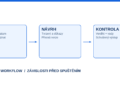
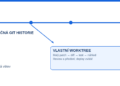
Start with one domain, not the entire shared drive. For each source, record whether you are connecting it in full, only selected parts or not at all. Label work-in-progress drafts so they cannot masquerade as approved procedures. A document without an owner may remain in the register, but admit it to answers only under a previously agreed exception, not because it sounds relevant.
For an introduction to the mechanism, see the explanation of RAG and its limitations. Here we address practical input governance: who approves a fact, how a change reaches the index and how you prove the assistant is not using an old copy.
A copyable administration record
Maintain a record for the document family and separately for every immutable version. Replace the bracketed fields with actual data. Unknown states should be visible and have an owner responsible for completing them. This proposal is not a universal database schema; you must connect the individual fields to your source system.
- Identity and scope
- [document_id, version_id, title, domain, product, market, language, usage situation]. The same filename is not a stable identity. Distinguish versions even when only one decisive sentence changes.
- Responsibility and approval
- [content owner, deputy, approver, draft/approved/withdrawn status, approval evidence and time, next review]. Name a specific responsible person; a department name is not enough.
- Time
- [created, ingested, effective from, effective until, replaces version_id, last synchronization time]. Record the time zone and whether the interval’s end is exclusive. An empty end means open-ended validity, not an unknown date.
- Origin and location
- [original URL, source version, article/page/paragraph, chunk_id, content fingerprint, parser version]. The link should lead to a verifiable passage in that version. A fingerprint detects change; it does not confirm accuracy.
- Access
- [source ACL, identity-verification method, permitted groups, permission version, synchronization time, maximum tolerated delay and response when exceeded]. Missing permissions must not mean access for everyone.
- Conflict and termination
- [related version_id, conflict description, affected scope, deciding content owner, resolution status; withdrawal reason, deletion marker, layers to remove and verification evidence]. Archiving, withdrawing from answers and physical deletion are different operations.
An engineer needs to derive verifiable rules from this record. For example, an approved document without effective dates is not indexed into the normal answering branch. Two overlapping versions with the same scope and different decisive values are referred to the content owner. This check can be performed on structured data; you do not need to wait for the model to notice the conflict.
Distinguish upload date, effective date and expiry
A new version may be uploaded in October but take effect only in November. Selecting the latest file would apply a future rule prematurely. Conversely, someone may re-upload an old attachment in November. Ingestion dates are useful for operational checks, not as a substitute for effective dates.
Our example uses an interval with an inclusive start and an exclusive end date. D1v1 is therefore valid from January 1 until the start of November 1, 2026. D1v2 starts on November 1. There is no overlap or gap at the boundary. Timestamps including hours would require equally precise handling of time zones and conversion.
On a narrow screen, scroll the table horizontally; with a keyboard, focus the region and use the arrow keys.
| Version and passage | Effective period | Illustrative content | Permitted roles |
|---|---|---|---|
| D1v1, §1 | Jan 1–Oct 31, 2026 | Orion service: reports accepted until 16:00 | support, manager |
| D1v2, §1 | from Nov 1, 2026 | Orion service: reports accepted until 18:00 | support, manager |
| D2, §2 | from Jan 1, 2026 | Orion budget: 240 illustrative units | manager only |
| D3, §1 | from Jan 1, 2026 | Service report form identifier: F7 | support, manager |
The query “until what time can a service report be submitted?” needs an as-of date. That may normally be today; for an explicit question about the past, use and clearly label the historical state. The date of the situation being examined need not be the conversation date. If it cannot be determined safely, asking for clarification is better than guessing.
Resolve conflicts and link to the original passage
Two documents may only appear to conflict: one applies to a different product or contract. Compare their scope before assessing a conflict. Text similarity alone is not enough. For a real dispute, it should be possible to trace what was found, whom the case was referred to and who decided on the correction.
The test below uses a simpler situation: two different service-deadline values exist for the same family and effective period. The conflict is known in advance from a structured field, not automatically understood from arbitrary Czech text. This is an important limitation. Passing the test does not prove a reliable conflict detector across an entire company wiki.
A citation should carry the version identity and location, for example D1v2, §1, not just “service documentation.” If a link always opens the latest file, it does not substantiate a historical answer. You need an immutable revision or another authorized way to access the passage as it was then. Archive access must still respect the user’s permissions.
A source hierarchy may help with escalation, but will not by itself resolve an exception or a different scope. The system should not invent a compromise between two numbers. For an important dispute, pause the affected answer and show both sources to the authorized content owner. Names and contents of protected documents do not belong in a publicly accessible error message, however.
Propagate permissions all the way to the retrieved excerpt
Logging into an application is not permission to read every source. Checks must apply to search candidates, the model’s final context, citation previews and output copies. If the model receives an unauthorized paragraph and the interface merely hides its link afterward, the content may already have influenced the answer.
Microsoft 365 connector documentation, checked on November 18, 2026, distinguishes synchronized connectors with indexing from federated runtime retrieval without indexing content into Microsoft 365. These are two different update and authorization paths, not proof of zero retention in every other layer. Verify the selected mode for the specific connector and account.
Azure AI Search documentation, also newly branded Foundry IQ, describes several document-permission mechanisms. When checked directly on November 18, 2026, it listed SharePoint ACLs and supported ADLS/Blob permissions, for example, as generally available with REST API 2026-10-01, while enforcement of Purview sensitivity labels remained in preview. Freshness follows different rules: indexed ACLs are snapshots requiring updates, while evaluation of other permissions may involve its own propagation and caching. The documentation explicitly promises neither instant revocation nor a single freshness deadline for the entire corpus. Do not infer immediate access revocation from the general term ACL.
Agree on a measurable synchronization deadline and behavior when it is exceeded. A sensitive query can be temporarily stopped or checked directly against the source if the architecture supports it. Unknown permission should not automatically be interpreted as consent. Enforce permissions technically; “do not reveal other people’s data” is not a substitute for authorization. The article on MCP and AI agents discusses the related distinction between instructions and permissions.
Test role changes, corrections and deletion
We actually ran the verification fixture locally in Python, without a model API or client data. Ten checks passed: selection before the effective date, the exact time boundary, allowed and denied roles, a role change with an existing cache, ACL revocation, value correction, a deletion marker, an index rebuild respecting the marker and detection of a known conflict. This is a rules test over a small data model, not a product security audit.
For caching, the test distinguishes role, permission version, content version and validity date. After an ACL change, the key changes and the old result is not reused. Production often also requires user identity and tenant; two people in the same general role need not have identical permissions. An output cache must not become a new authority that bypasses a fresh check.
The correction in the example changes the service cutoff from 18:00 to 19:00, and subsequent retrieval must return the correction. Deletion marks the entire D1 family as unusable and also checks the construction of a new index. Otherwise an old version might reappear after recovery. Not finding it in this fixture does not prove physical removal of copies at an external provider, in backups or in historical conversations.
Runnable synthetic Python example
Copy the entire code into a file named ukazka.py and run python3 ukazka.py. Python 3.10 or later is sufficient; the code does not read company data or make network calls. The values are illustrative. The output shows the results of ten document-lifecycle checks.
Long code lines can be scrolled horizontally. Use Tab to focus the region and the arrow keys to scroll; copy the entire code without changing its indentation.
"""Syntetická ukázka; Python 3.10+, bez balíčků a sítě. Nejde o LLM benchmark."""
import json,copy,re,time,statistics
DATA = {'documents': [{'id': 'D1v1',
                'family': 'D1',
                'version': 1,
                'section': '§1',
                'text': 'Servis Orion přijímá hlášení do 16 hodin.',
                'value': '16 hodin',
                'topic': 'orion servis',
                'owner': 'garant podpory (modelová role)',
                'approved': True,
                'valid_from': '2026-01-01',
                'valid_to': '2026-11-01',
                'indexed_at': '2026-01-02',
                'roles': ['podpora', 'vedouci'],
                'deleted': False},
               {'id': 'D1v2',
                'family': 'D1',
                'version': 2,
                'section': '§1',
                'text': 'Servis Orion přijímá hlášení do 18 hodin.',
                'value': '18 hodin',
                'topic': 'orion servis',
                'owner': 'garant podpory (modelová role)',
                'approved': True,
                'valid_from': '2026-11-01',
                'valid_to': None,
                'indexed_at': '2026-10-20',
                'roles': ['podpora', 'vedouci'],
                'deleted': False},
               {'id': 'D2',
                'family': 'D2',
                'version': 1,
                'section': '§2',
                'text': 'Rozpočet projektu Orion je 240 jednotek.',
                'value': '240 jednotek',
                'topic': 'orion rozpočet',
                'owner': 'garant rozpočtu (modelová role)',
                'approved': True,
                'valid_from': '2026-01-01',
                'valid_to': None,
                'indexed_at': '2026-01-02',
                'roles': ['vedouci'],
                'deleted': False},
               {'id': 'D3',
                'family': 'D3',
                'version': 1,
                'section': '§1',
                'text': 'Formulář servisního hlášení má označení F7.',
                'value': 'F7',
                'topic': 'formulář hlášení',
                'owner': 'garant podpory (modelová role)',
                'approved': True,
                'valid_from': '2026-01-01',
                'valid_to': None,
                'indexed_at': '2026-01-02',
                'roles': ['podpora', 'vedouci'],
                'deleted': False}]}
def load(): return copy.deepcopy(DATA)
def eligible(d,role,as_of):
 return d['approved'] and not d['deleted'] and role in d['roles'] and d['valid_from']<=as_of and (not d['valid_to'] or as_of<d['valid_to'])


def retrieve(docs,terms,role,as_of):
 wanted=set(terms.split());return [d for d in docs if eligible(d,role,as_of) and wanted<=set(d['topic'].split())]


def choose_version(candidates):
 if len(set(d['value'] for d in candidates))>1:raise ValueError('conflict: garant must decide')
 return candidates[0] if candidates else None


def lifecycle():
 docs=load()['documents'];out=[]
 def check(name,value):
  assert value,name;out.append({'test':name,'pass':True})
 check('before_effective', [d['id'] for d in retrieve(docs,'orion servis','podpora','2026-10-25')]==['D1v1'])
 check('boundary_exclusive', [d['id'] for d in retrieve(docs,'orion servis','podpora','2026-11-01')]==['D1v2'])
 check('role_allow',len(retrieve(docs,'orion rozpočet','vedouci','2026-11-18'))==1)
 check('role_deny',retrieve(docs,'orion rozpočet','podpora','2026-11-18')==[])
 # Safe cache key includes role/ACL epoch/content epoch/date; cache is never a new authority.
 cache={};epochs={'acl':1,'content':1}
 def lookup(role):
  key=(role,epochs['acl'],epochs['content'],'2026-11-18')
  if key not in cache:cache[key]=retrieve(docs,'orion rozpočet',role,'2026-11-18')
  return cache[key]
 lookup('vedouci');check('change_role_cache',lookup('podpora')==[])
 docs[2]['roles']=[];epochs['acl']+=1;check('acl_revocation',lookup('vedouci')==[])
 docs[1]['value']='19 hodin';docs[1]['text']='Servis Orion přijímá hlášení do 19 hodin.';epochs['content']+=1
 check('correction',retrieve(docs,'orion servis','podpora','2026-11-18')[0]['value']=='19 hodin')
 for d in docs:
  if d['family']=='D1':d['deleted']=True
 check('tombstone',retrieve(docs,'orion servis','podpora','2026-11-18')==[])
 rebuilt=[d for d in docs if not d['deleted']]
 check('rebuild_respects_tombstone',all(d['family']!='D1' for d in rebuilt))
 # Same effective interval plus inconsistent value must block; don't pick latest by ingestion date.
 conflict=copy.deepcopy(load()['documents'][1]);conflict['id']='D1v2-conflict';conflict['value']='21 hodin'
 candidates=retrieve(load()['documents']+[conflict],'orion servis','podpora','2026-11-18')
 blocked=False
 try:choose_version(candidates)
 except ValueError:blocked=True
 check('conflict_blocks',blocked)
 return out

print(json.dumps(lifecycle(),ensure_ascii=False,indent=2))
In practice, attach the request time, time reflected in answers, role used and specific evidence to every change. An access failure or the return of a deleted source is a separate blocking defect, not a minor drop in average quality. Confirm legal retention and removal rules with the responsible specialist; a successful technical test does not replace them.
Start with one content owner and one document family. If you cannot determine which version applies and who may see its passage, the next step is not a larger model. It is completing the record, update rules and a verifiable path for changes through the entire pipeline.
Need clear ownership of company knowledge?
I can help you define the pilot domain, content owners’ responsibilities and conditions for accepting source handling. Tell me where uncertainty about valid document versions arises today. We will agree on technical implementation and IT involvement according to scope; do not send confidential material through the form.