


An AI persona defines the role a model should adopt when answering. It can give it the perspective of an editor, analyst or trainer. It does not, however, give it real experience, access to company data or authority to make decisions on someone’s behalf. A useful brief therefore needs not just a role, but also a task, source material, boundaries and a review method.
Research into why model behaviour changes during a conversation belongs in the same discussion. The January 2026 study The Assistant Axis examines model personas and their stability. It does not investigate marketing customer personas or prove that a simulated customer can replace an interview with a real person.
The word persona covers three different things
First, clarify whose role you mean. A model persona is the way an assistant presents itself and responds. In everyday work, you influence it with instructions such as “help as a factual, specialist editor”. In the Assistant Axis research, the term also refers to behavioural characteristics associated with particular directions in a model’s internal activations. A text instruction and an intervention in those activations are not the same operation.
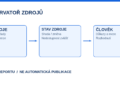


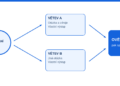
A reader persona, by contrast, describes who the output is for. It might be a production manager who needs to choose a maintenance provider and has no time to study technical abbreviations. This context helps determine how much explanation to include. But if the description is not based on customer data, it remains a working assumption. A name, age and favourite coffee do not make it a validated segment.
The third use is a simulated respondent: you ask the model to play a customer and answer on their behalf. You can use this simulation to explore questions or possible objections. It does not give you new testimony from the market. When a model says “I would not buy this service”, that is a generated response in a specified situation, not a customer interview or measured willingness to pay.
A role should define the work, not manufacture authority
The Give Claude a role section of Anthropic’s documentation recommends a role in the system prompt to focus behaviour and tone. That is a proportionate purpose: telling the assistant which working perspective to use when assessing a problem. It is not general proof that every role improves the accuracy of every answer across all models.
The difference is clear in an instruction such as “you are the best SEO expert with twenty years of experience”. This does not give the model twenty years of decisions about your website. Nor do you need it to invent clients, certifications or a personal backstory. You need it, for example, to distinguish a data error from a hypothesis about declining traffic and attach supporting evidence to each conclusion.
It is better to describe responsibility: “Assess the export as an analytical assistant. Separate findings, possible causes and missing data.” The role then frames the work, while verifiable criteria determine its quality. For a simple task, a precise brief without any persona may be enough. What works in your situation should be decided by comparing outputs, not by how impressive the opening sentence sounds.
What the Assistant Axis study actually found
The authors primarily examined Gemma 2 27B, Qwen 3 32B and Llama 3.3 70B. They used different roles to elicit different responses and analysed internal activations: numerical states arising as the model processes input and generates text. In the space of these representations, they found a prominent direction related to how closely the model behaves like the default helpful assistant. They called it the Assistant Axis.
The study’s significance is not that it discovered a human personality inside a program. It shows relationships between measurable internal states and certain behavioural patterns. The authors also intervened in activations and observed changes in behaviour. In their tests, shifting towards the default assistant reduced some harmful responses elicited by persona jailbreaks: attempts to bypass rules by imposing a role.
Another part used multi-turn conversations in which other language models simulated users. In the models studied, the authors observed greater departure from the default assistant in situations with a therapeutic tone and in philosophical discussions about AI subjective experience, for example. Ordinary bounded tasks, technical questions and text editing tended to be more stable. The authors call this gradual departure persona drift.
Not every different role led to harmful behaviour. The study explicitly distinguishes departure from the assistant from a particular undesirable response. The important point is that a suitable answer at the start of a conversation does not validate what follows. Operational review should therefore not be limited to the first exchange.
Intervening in activations is not better prompt wording
The authors also tested activation capping: constraining the projection of internal activations along a selected direction to keep it within a specified range. This required access to the model’s internal workings. The result cannot be turned into an instruction to “add this sentence to the system prompt for the same protection”.
The sample’s limits are equally important. The main models studied were not today’s closed commercial products; the paper notes limitations in model selection, synthetic conversations and automated behavioural evaluation. The findings are therefore not a universal safety certificate, a measurement of all current assistants or proof of AI consciousness. They are a specific research input for further testing.
For a business, a more restrained conclusion is useful: do not judge a persona solely by the tone of an answer, and monitor behaviour in context. If an assistant convincingly claims to have experienced something, hold a licence or be able to approve an exception for you, verify the facts and authority outside its own statements. A friendly voice and expert vocabulary do not replace that check.
An illustrative brief: an analyst who does not pretend to know the company
The following example is a proposed brief, not the result of a verified experiment. Imagine you are preparing material for a decision about content changes. The inputs are an anonymised Search Console export and a description of recent website changes. Before sending the data, check that you are allowed to process it in the chosen service.
Work as an SEO analytical assistant. Your task is to prepare material for a person who decides priorities. Use only the attached export and change log. First check the period, filters and missing data. Then separate substantiated observations from hypotheses. For each observation, identify a specific row or field. If the cause cannot be determined, state what further evidence you need. Do not invent results, client experience or certainty about the cause. Do not suggest automatic publication or website changes. The output will be a brief assessment, follow-up questions and a proposal for further verification.
The brief includes a role, but relies mainly on inputs and review. If the model overlooks a missing period or infers causation from correlation, it has failed the check, even if its answer sounds like an experienced consultant. To investigate the contribution of the role itself, use the same material and criteria in a version without the opening sentence about the analyst.
Test follow-up questions and authority boundaries too
For an initial internal test, choose several real task types and safe illustrative or anonymised material. Save the exact brief, model version, available tools and complete answers. Compare factual accuracy, traceability of evidence, acknowledgement of unknowns and the usability of the next step. One successful answer is not enough to decide on deployment.
Then add follow-up situations: the user insists on an unconfirmed conclusion, asks the assistant to confirm an assumption or wants it to skip approval. Write down in advance what the application should do and when it should hand the task to a person. This test proposal is a practical recommendation, not a reproduction of the Assistant Axis research method. An ordinary text interface does not measure the same axis in activations.
If an application can change records, send messages or publish, its technical configuration must enforce permissions. The sentence “you are a careful assistant” is no substitute for access controls and approval of a risky action. The article on adversarial machine learning explains the broader context of manipulation.
Start with one bounded task and write down how you will recognise a correct output. Only then add the role, tone and further instructions. For editorial use, the workflow for AI text on a website builds on this review: from source material and claim verification to approval of a specific version.
Want to brief AI more precisely?
I can help define the assistant’s task, source material, role boundaries and review criteria. Let’s discuss the work you want to use AI for. A consultation can clarify the brief; appropriate tests must then establish the reliability of the specific solution.




