


An off-the-shelf AI assistant, an integration and a custom system are not three prices for the same thing. They differ in what you can customize, who manages the data and who will fix a problem six months from now. Before comparing proposals, prepare the same brief and ask every supplier to identify what they will deliver, what you must provide and what remains out of scope.
A company office product may be enough for everyday document work. Connecting several systems may require an integration. Consider custom development where available options cannot reasonably meet an important requirement. A custom application can still use a third-party model; it does not automatically mean your own language model or local operation.
Describe the task and the sensitivity of the inputs
Start with a sentence you can demonstrate: an employee asks a question about approved documentation and receives a draft answer linking to a valid source. Add who may see the answer, who approves it and whether the system only reads or also changes things. “A chatbot over all our data” obscures these differences.
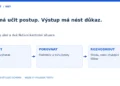

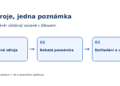

The brief must also cover situations where the correct result is not an answer. A document may be missing, invalid or inaccessible to the user. Under a predefined rule, the assistant should ask for clarification, deny access or hand the case to a person. If you first need to understand how document-based systems work, see the explanation of RAG and its limitations.
Prepare a safe test package for the procurement process. Use public or explicitly fictional documents and two user roles with different permissions. Do not send real client contracts to every potential supplier. Confirm data sensitivity and the permitted environment with the data owner and IT before the demonstration.
Distinguish licensing, integration and development
A license buys access to a standardized service. The product vendor determines its core behavior and terms. Integration connects the product to approved sources or downstream processes, adding work on access, connection recovery and interface changes. A custom system lets you design the application in more detail, but also brings responsibility for testing, deployment and long-term maintenance.
| What to check | Off-the-shelf product | Integration | Custom system |
|---|---|---|---|
| Access to sources | The service’s supported sources and permissions | Connector, service account and permission propagation | Custom design of sources, permissions and tests |
| Changing behavior | Settings within product limits | Rules between connected steps | Application changes within the agreed scope |
| Operational owner | The company manages accounts and usage; the provider manages the service | Also assign responsibility for connections and errors | Assign responsibility for the application, infrastructure and dependencies |
| Exit | Verify exports and deletion | Hand over configuration and revoke access | Hand over agreed code, licenses, data and recovery procedure |
The boundaries between options may overlap. An off-the-shelf product may offer custom agents or automation, and a custom application may rely on a paid cloud service. A build or buy label is therefore no substitute for a breakdown of the actual components. For each requirement, ask for one of these answers: “standard feature,” “configuration,” “development,” “unsupported” or “needs verification.”
In an office environment, include specific versions of Microsoft 365 Copilot and Google Workspace with Gemini in the shortlist. According to Microsoft’s documentation, prompts, responses and data accessed through Microsoft Graph are not used to train foundation models; the assistant should expose organizational content within the user’s permissions. This is not a claim about every application with Copilot in its name, nor proof that sharing is configured correctly in your company.
The Google Workspace Privacy Hub similarly defines protections for eligible editions and refers to contractual restrictions on training without the customer’s prior permission or instruction. You must not automatically apply them to a personal Gemini account. Confirm feature availability, history retention and administrative controls for the specific edition. This is documentation research checked on November 18, 2026, not my comparative test of these products.
Request a demo using the same tasks
Do not compare one supplier’s edited video with another’s unprepared live demo. Give everyone the same core inputs, explain the evaluation and reserve some cases for joint verification that cannot be memorized in advance. Separate a larger paid pilot from a short sales demonstration; a complete solution is not a fair unpaid selection exercise.
Illustrative acceptance set: a fictional company prepares twelve questions about sample service documentation. Eight have an unambiguous answer, two lack sufficient evidence and two test access to a document restricted to another role. For the first eight, the evaluator should check the answer, the cited passage and the version’s validity. When evidence is missing, acknowledging the gap is the correct result; for an inaccessible document, the output must not reveal its protected content.
A working condition agreed in advance might be: at least seven of the eight ordinary answers must pass factual review, and no case may expose unauthorized data. This illustrates the structure of a condition, not a recommendation that an 87.5% success rate is sufficient for your deployment. An access-control failure cannot be offset by attractive answers in other rows. Twelve questions are also not enough to prove reliability at scale.
Save the question, document version, role, product and settings, answer, citations, time and reason for the final rating. Repeat important cases and record variations too. Separate the sample used for tuning from later acceptance testing. Otherwise you may accept a solution that excels only on familiar examples.
Separate the build, infrastructure and operations
Request a price for the chosen scope and period, not just a developer’s hourly rate or monthly license. Specify user numbers, expected usage volume, data sources, peak load, availability and support. The supplier should list assumptions and what triggers additional work. Token volume without context for the whole task does not tell you the cost of a completed request.
Include analysis, document preparation, setup, development, verification, training and handover in the one-off costs. Recurring costs include licenses, model calls, infrastructure, monitoring, knowledge management, support and tests after updates. Add internal time and separately price termination or switching suppliers. Do not combine paid work and the value of utilized capacity into a supposed cash-flow figure.
Illustrative calculation, not market pricing: proposal A has setup costs of CZK 60,000 and recurring external operating costs of CZK 12,000 per month. Proposal B has setup costs of CZK 180,000 and recurring external operating costs of CZK 5,000 per month. Over twelve full operating months, the totals are CZK 204,000 for A and CZK 240,000 for B. The simplified break-even point is 120,000 ÷ 7,000, or approximately 17.14 months of operation. With monthly billing, B becomes cheaper only in month eighteen.
The calculation assumes the same scope, quality, operational start date and unchanged prices; it excludes VAT, internal work, discounting and exit. Do not automatically use twelve operating months for the first calendar year. A more expensive proposal may also have a different scope or risk. Fill in missing items and mandatory conditions before comparing totals.
Define data and documentation handover and exit
For custom development, clarify contractually which components you receive and with what rights. Your own cloud account does not mean you own a third-party model. Receiving source code may not cover rights to libraries or further development. You may not receive a standard product’s code; you need to understand exports, licensing and how to terminate the service. A lawyer should review the legal wording; this article is not a contract template.
A practical handover checklist should cover architecture and data flows, administrative roles, secure transfer of access, the repository and licenses for agreed components, configuration, the test set, operational documentation and backup recovery. Specify who will repair a connector after an API change and how answer degradation will be detected. “Maintenance included” without scope and response times is not enough.
Test exit using safe data before final acceptance: the company receives the agreed export, and another authorized administrator restores or takes over the agreed component using the documentation. Check the continuity of documents, permissions and configuration, not just whether a ZIP file exists. Then revoke test access and verify the result. Handle deletion at the provider separately, including retention and legal exceptions.
Make acceptance conditional on a measurable output
Acceptance should not rest on “users like it.” It should state which features, roles and outputs were verified, on which version and with which unresolved defects. Agree on the severity, owner and next step for every defect. Have acceptance rules, remedies and payment conditions reflected in an appropriate contract; do not derive them from a single publicly quoted accuracy percentage.
A short working sheet is enough for a comparable request for proposals: the task and prohibited operations; permitted sources and roles; acceptance cases; scope of licensing, configuration and development; one-off and recurring costs; operational responsibilities; handover and termination. Mark uncertainties as unverified rather than pretending the brief is complete. The SEO RFP article explains a similar procurement approach in another field.
The result may simply be buying a few company licenses without a custom system. But if a standard product cannot meet an important condition, identify the exact gap and have its resolution priced. The AI tools overview can help you get your bearings; the delivery decision must rest on your task and responsibilities, not the order of brands in a list.
Want to compare AI proposals against the same brief?
I can help you clarify the scope, prepare a supplier brief and agree on verification and handover conditions. Tell me what the assistant should do and which options you are considering. We will leave legal and security assessments to the relevant specialists; I can help connect their requirements to a workable project.




